The Modern Age |

|
In the Modern Age, Zymoglyphic art becomes more formalized and self-referential, more about art itself than serving a specific function in cultural life. We see a succession of art movements as each new trend pushes aside the old, establishing itself as the latest thing before becoming outdated itself. Artists reject the notion of well-crafted, narrative painting and sculpture (in a land of indolent dreamers, this was never very popular anyway, but it was now justified on theoretical grounds).
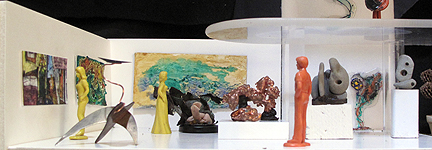 |
Zymoglyphic Art of the Modern Age Gallery
A gleaming new showcase for miniature versions of the art of the modern age |
|
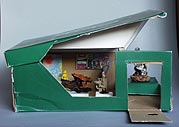
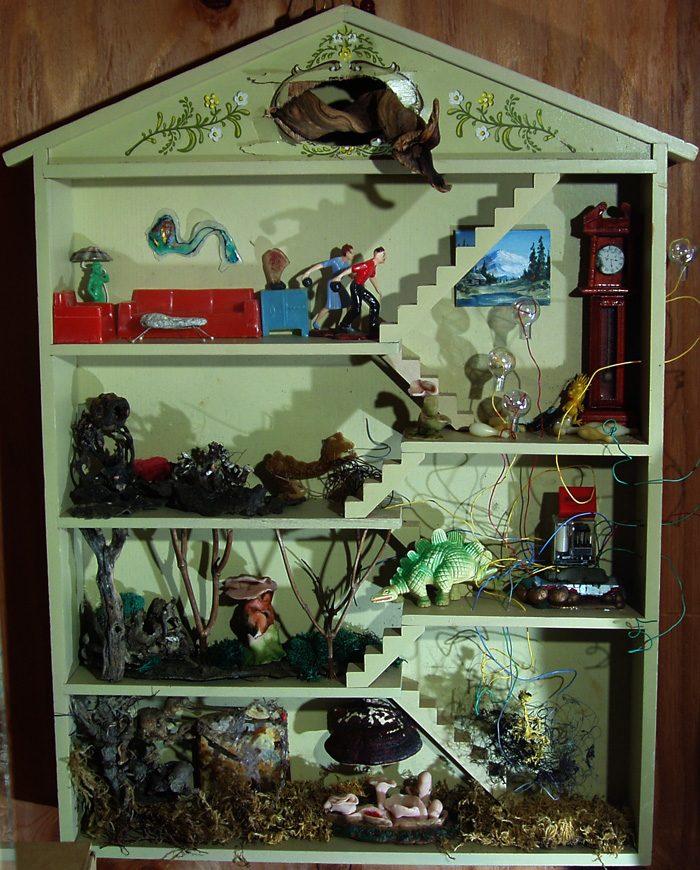
Shoebox Art Galleries Dream House Diorama |
Each new style or medium is inevitably a recasting of traditional forms. The Natural Modernists and the cloud sculptures, for example, draw on the tradition of viewing stones of the Era of Oriental Influence. The curiosity cabinets and dioramas of the Age of Wonder reappear in modern form as shoebox art galleries.
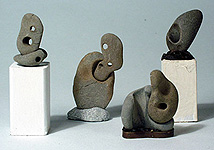 |
Natural Modernism A prime example of nature imitating art |
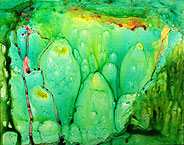 |
Biomorphic Abstraction Acrylic paintings that explore the notion of evolution from the primordial ooze |
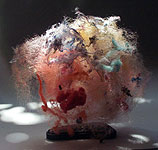 |
Ephemeral Abstraction Assemblages made from windblown debris |
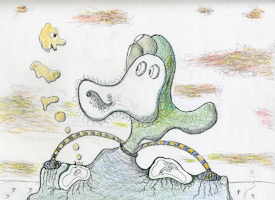 |
Sketches Spontaneous drawings intended to illuminate various aspects of the Zymoglyphic region |
|
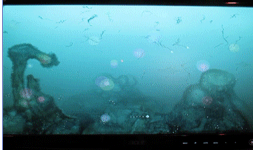
The Cybernetic Aquarium Zymoglyphic art moves into the computer age in the new millenium |